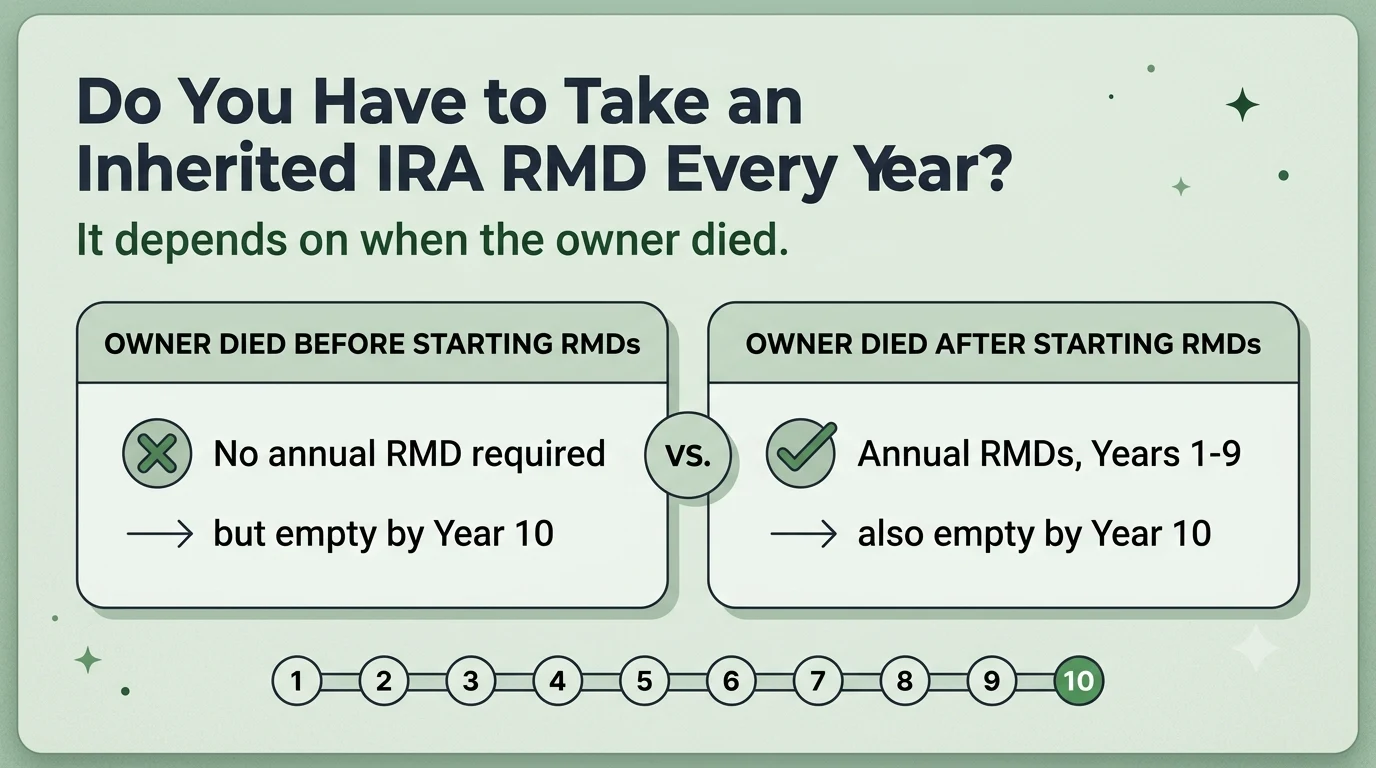
Do You Have to Take an Inherited IRA RMD Every Year?
The annual-RMD question depends on whether the deceased owner died before or after the required beginning date.
↗Topic · 12 guides
Whether a beneficiary owes an annual required minimum distribution inside the 10-year window, and how that amount is calculated.
The annual-RMD question depends on whether the deceased owner died before or after the required beginning date.
↗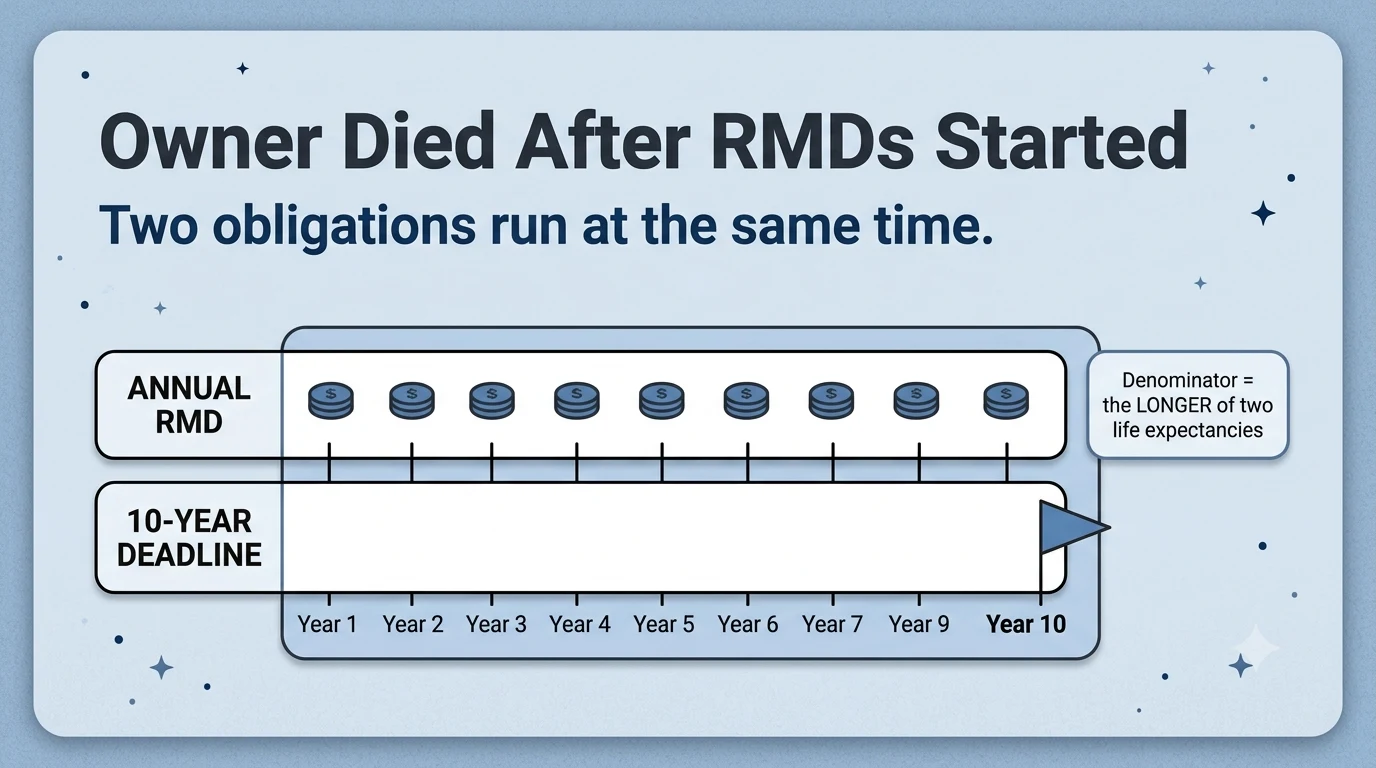
How the annual beneficiary RMD is calculated under the longer-of life-expectancy rule while the separate 10-year deadline still runs.
↗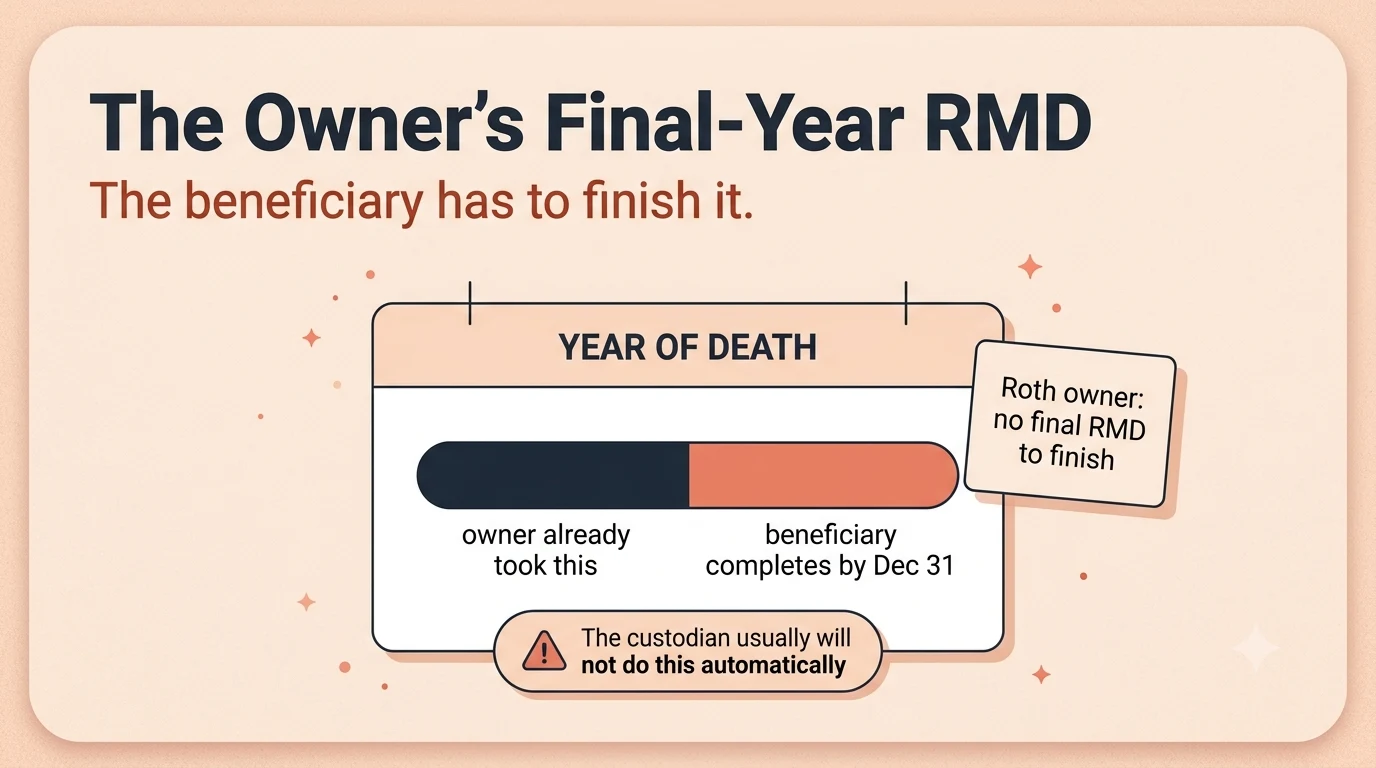
How to reconstruct and finish the deceased owner’s final RMD, including late-year deaths, multiple beneficiaries, Roth IRAs, and transfers from employer plans.
↗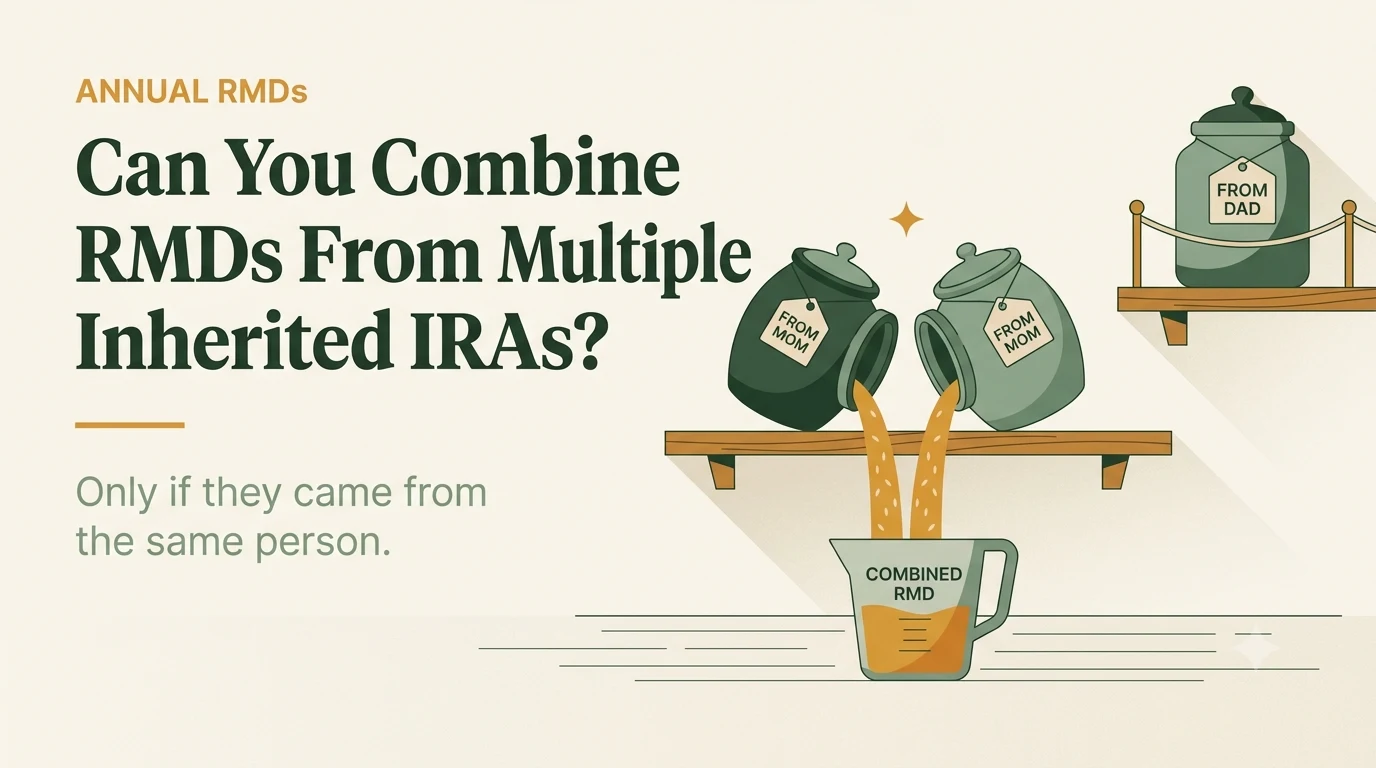
The aggregation rule is narrower for inherited IRAs than many beneficiaries expect, especially when accounts came from different people.
↗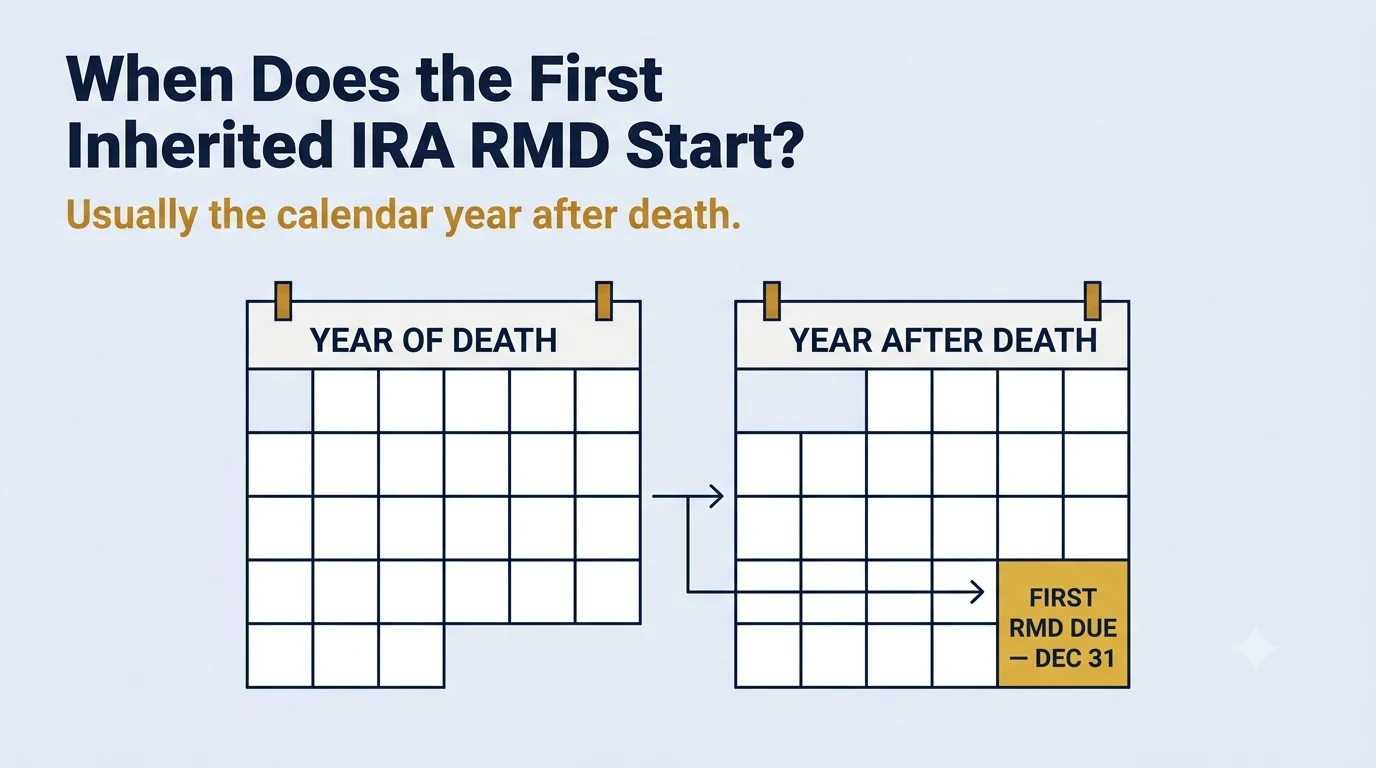
The first beneficiary RMD is usually tied to the calendar year after death, but the answer depends on beneficiary status, the owner’s required beginning date, and the 10-year branch.
↗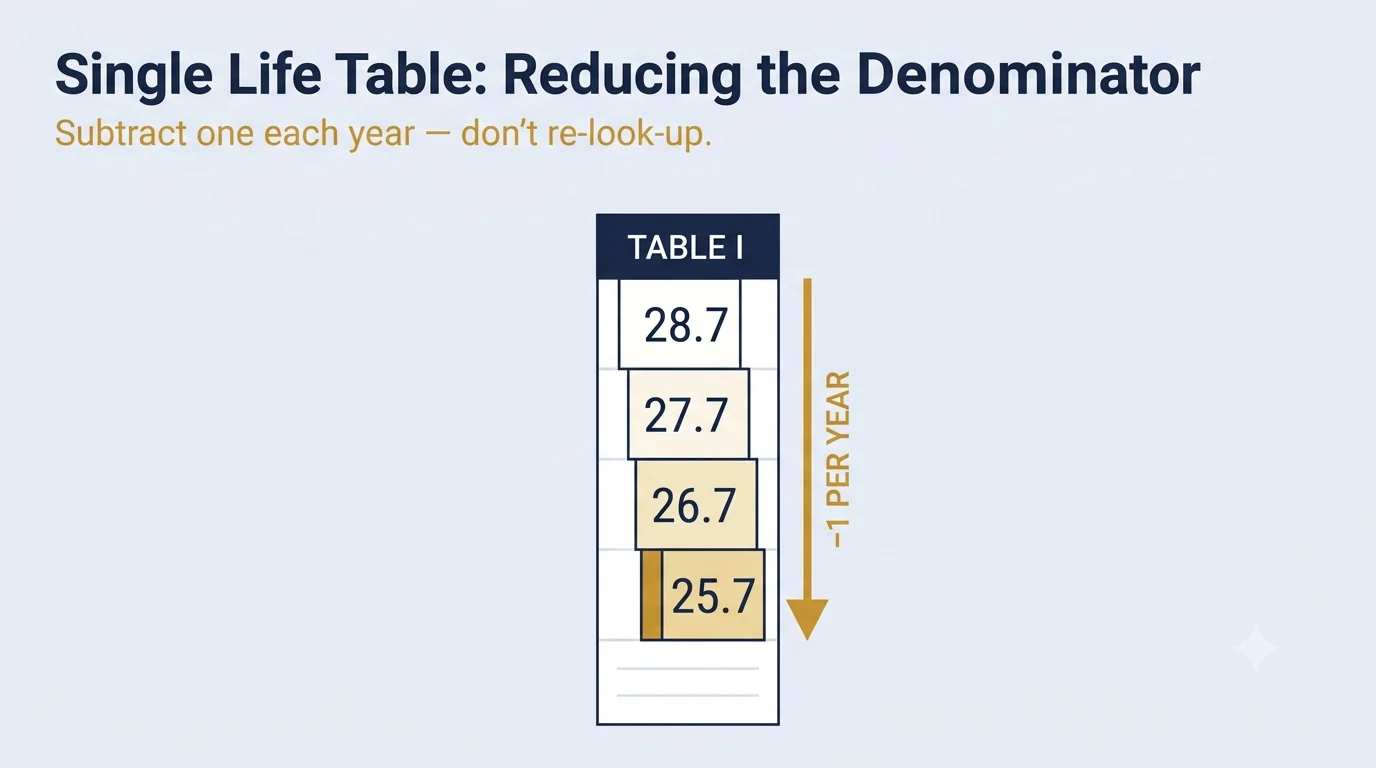
How nonspouse beneficiaries use Table I, when the initial age is measured, and why the denominator usually decreases by one rather than being looked up fresh each year.
↗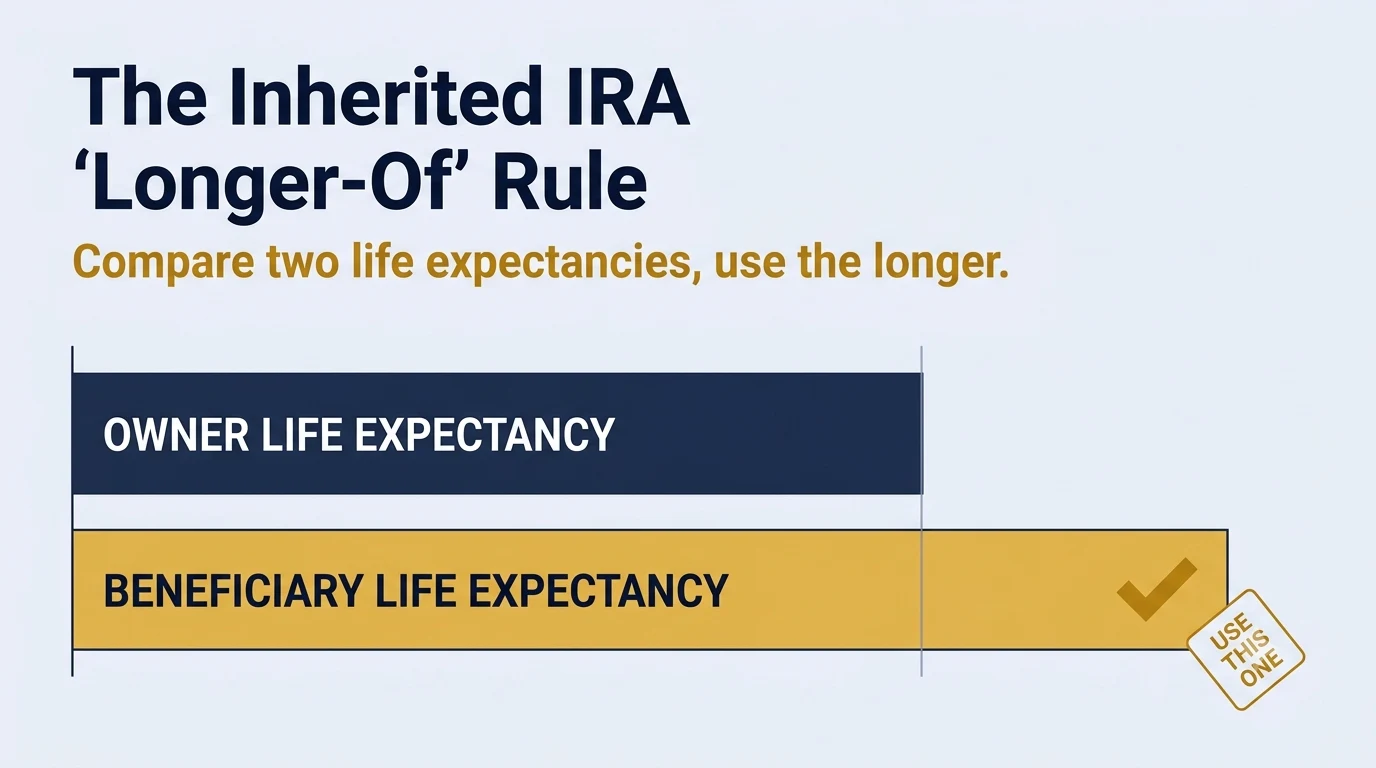
When an IRA owner dies on or after the required beginning date, the annual beneficiary RMD can depend on a denominator comparison that is easy to miss.
↗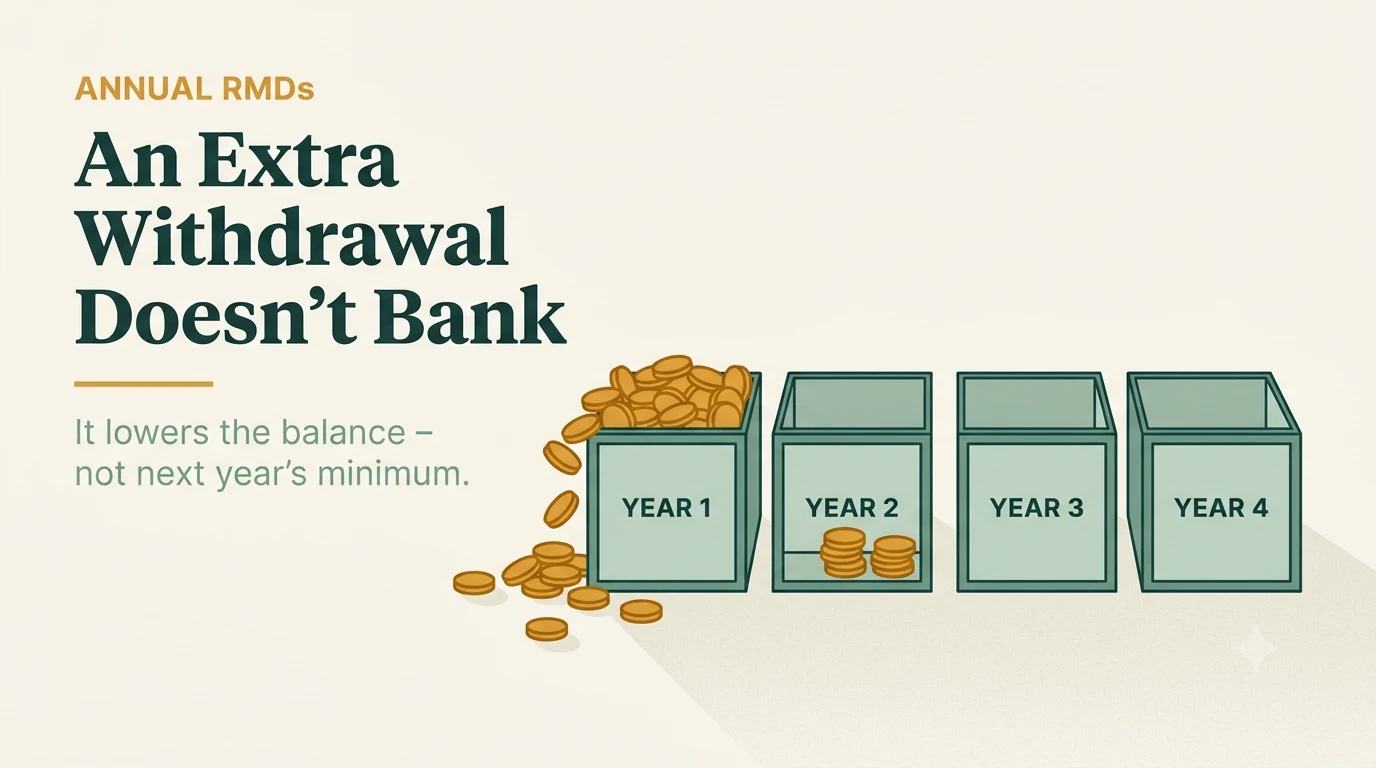
A distribution above the current inherited-IRA minimum can reduce the future account balance, but it does not create a carryforward credit against a later RMD.
↗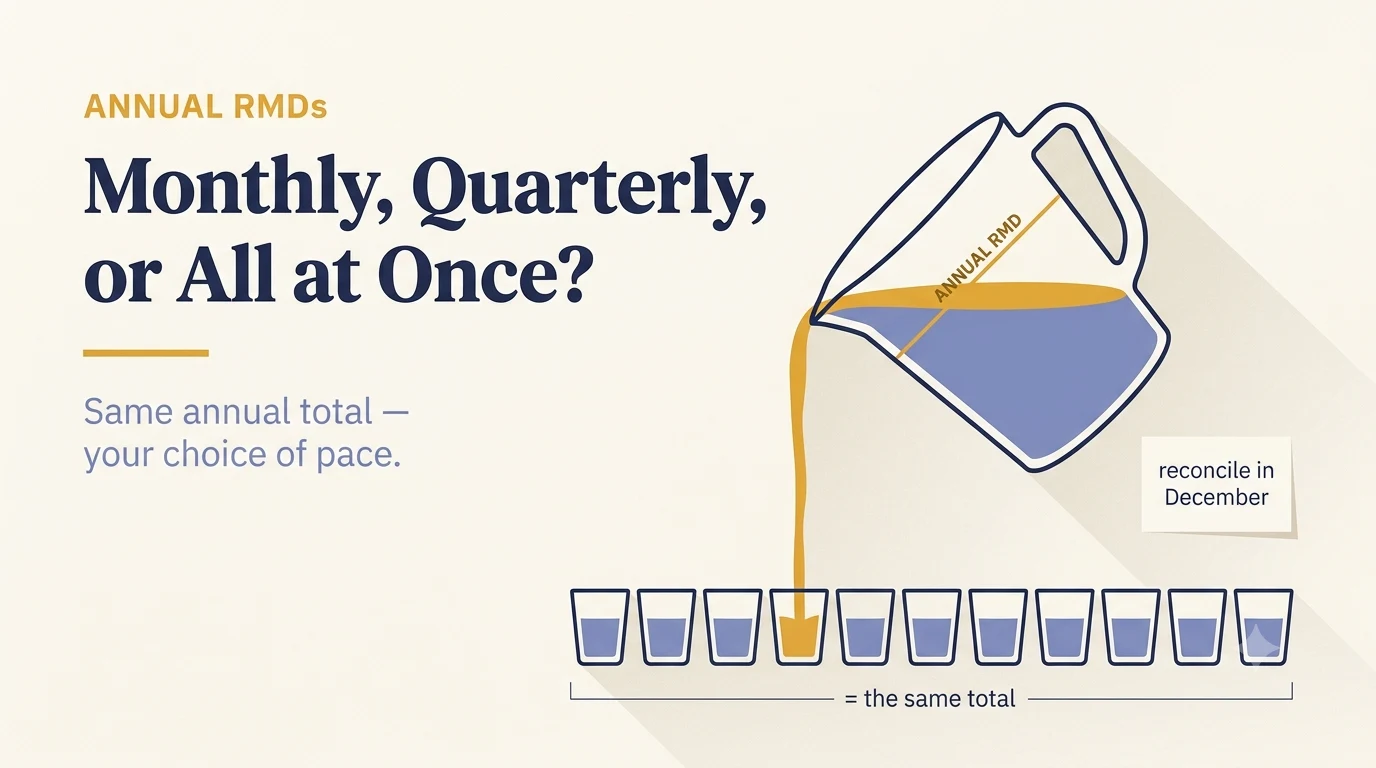
RMD rules set an annual minimum and deadline; beneficiaries can generally use installments, but timing and year-end reconciliation still matter.
↗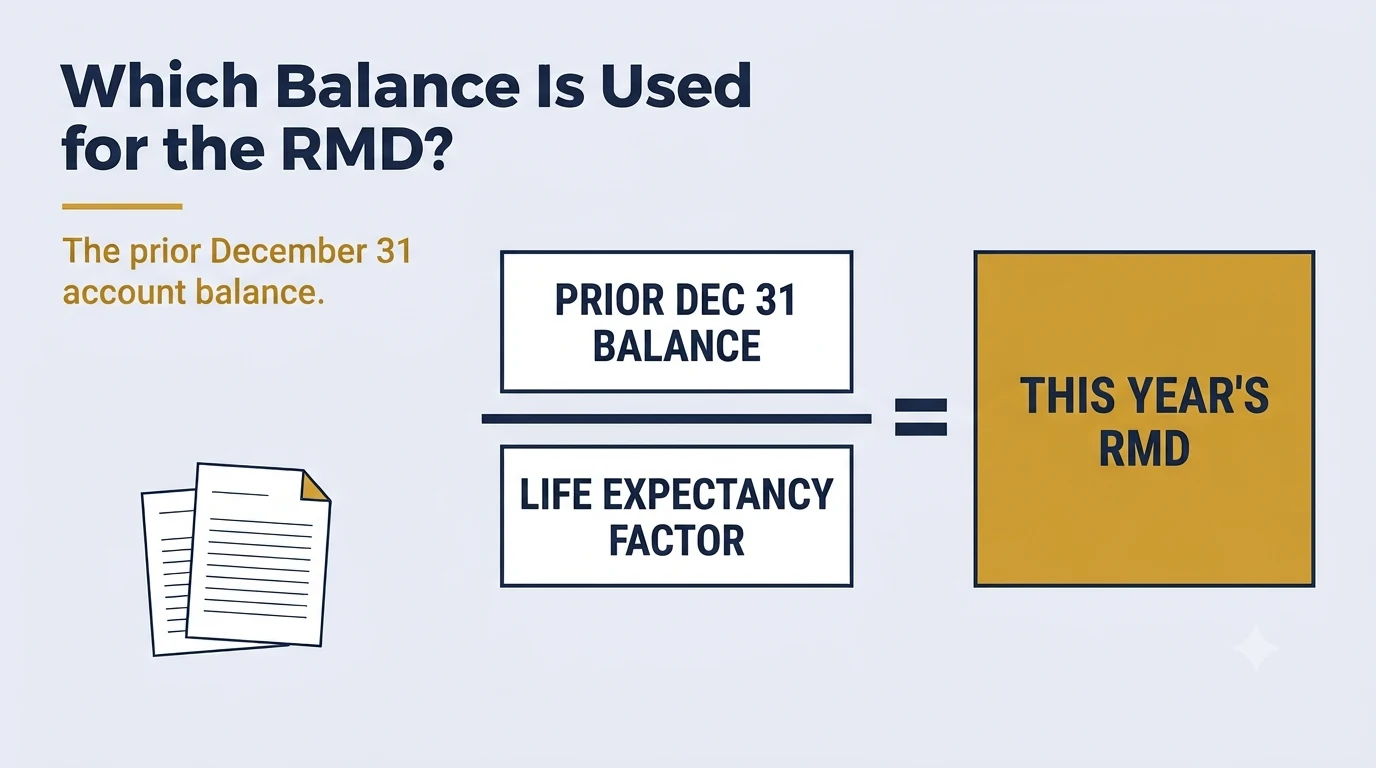
How the prior December 31 balance fits into the beneficiary RMD formula, including transfers and record gaps.
↗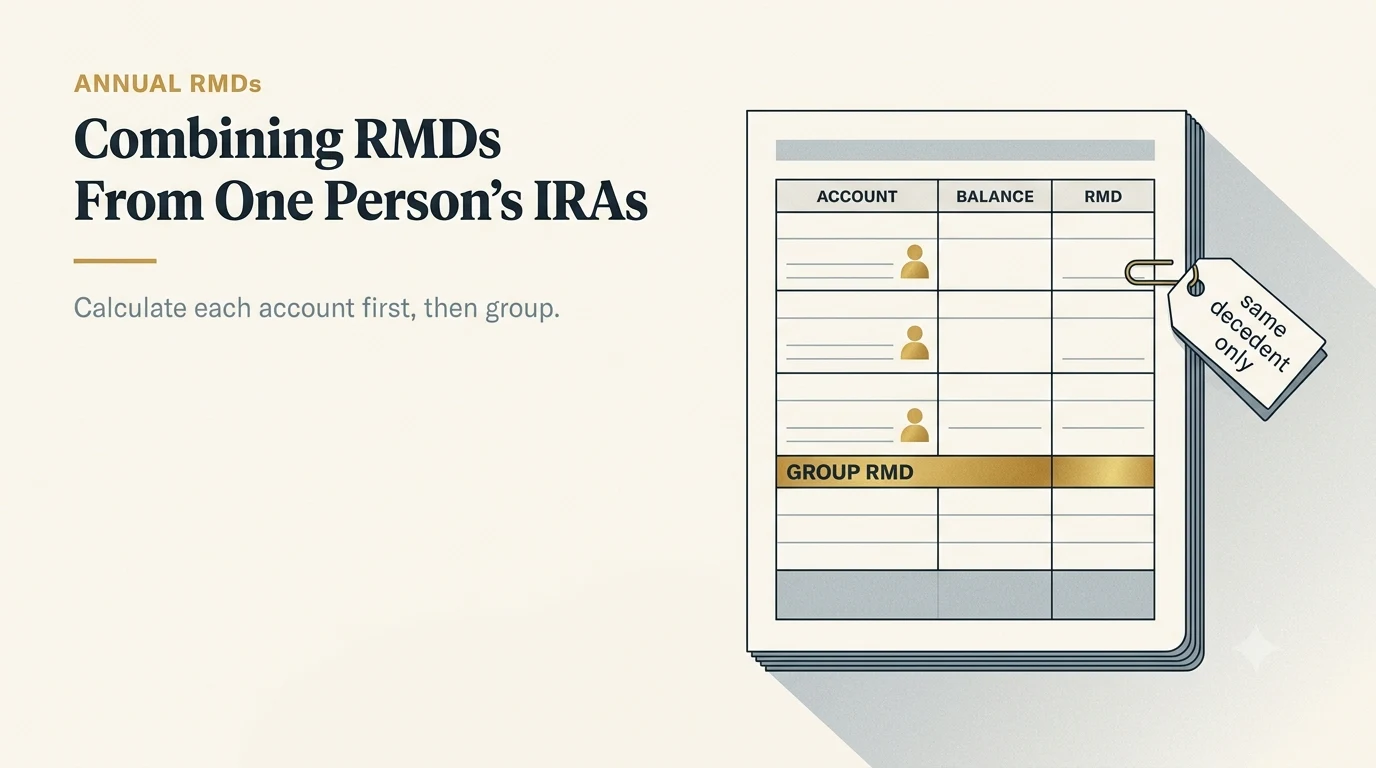
A practical worksheet for calculating each inherited IRA first and then deciding whether permitted aggregation can simplify the actual distributions.
↗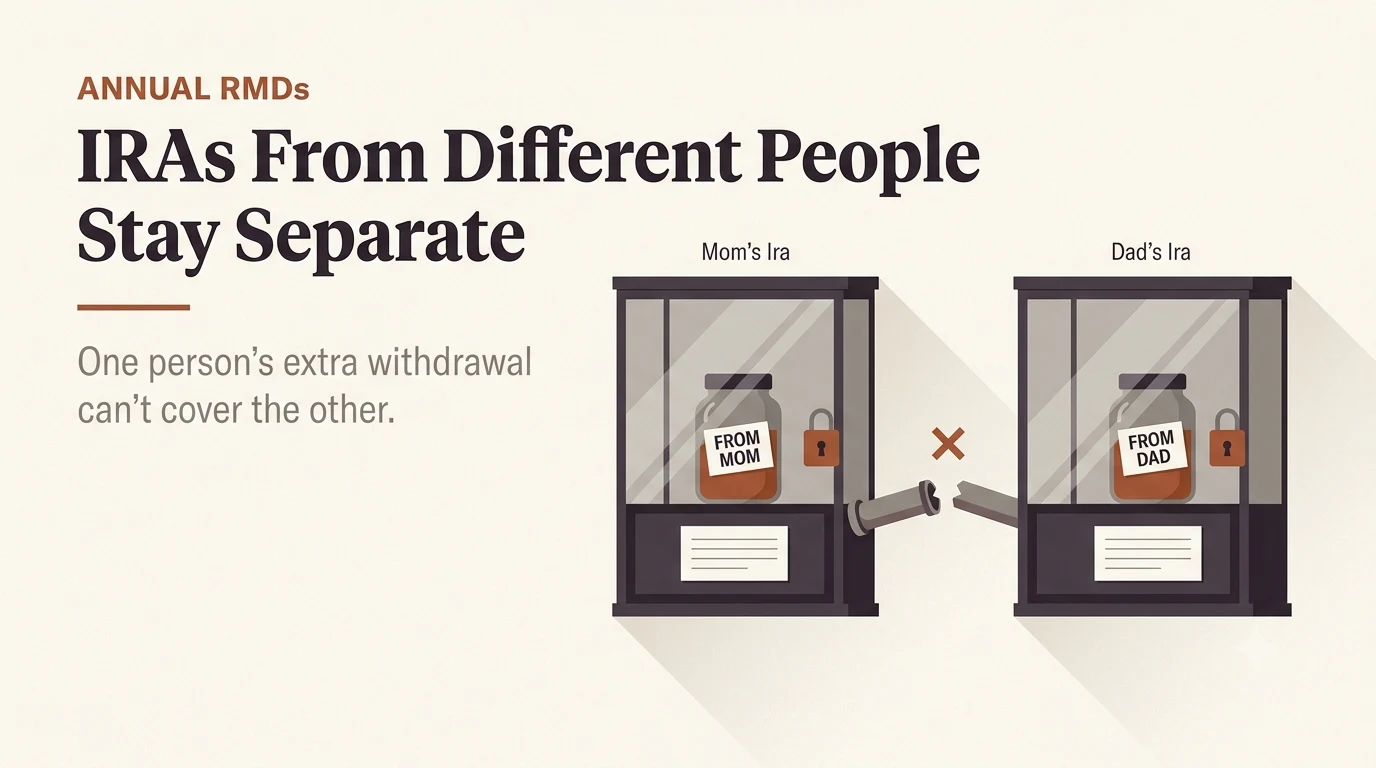
Two inherited IRAs in the same beneficiary’s name can still have completely separate RMD obligations when they came from different people.
↗