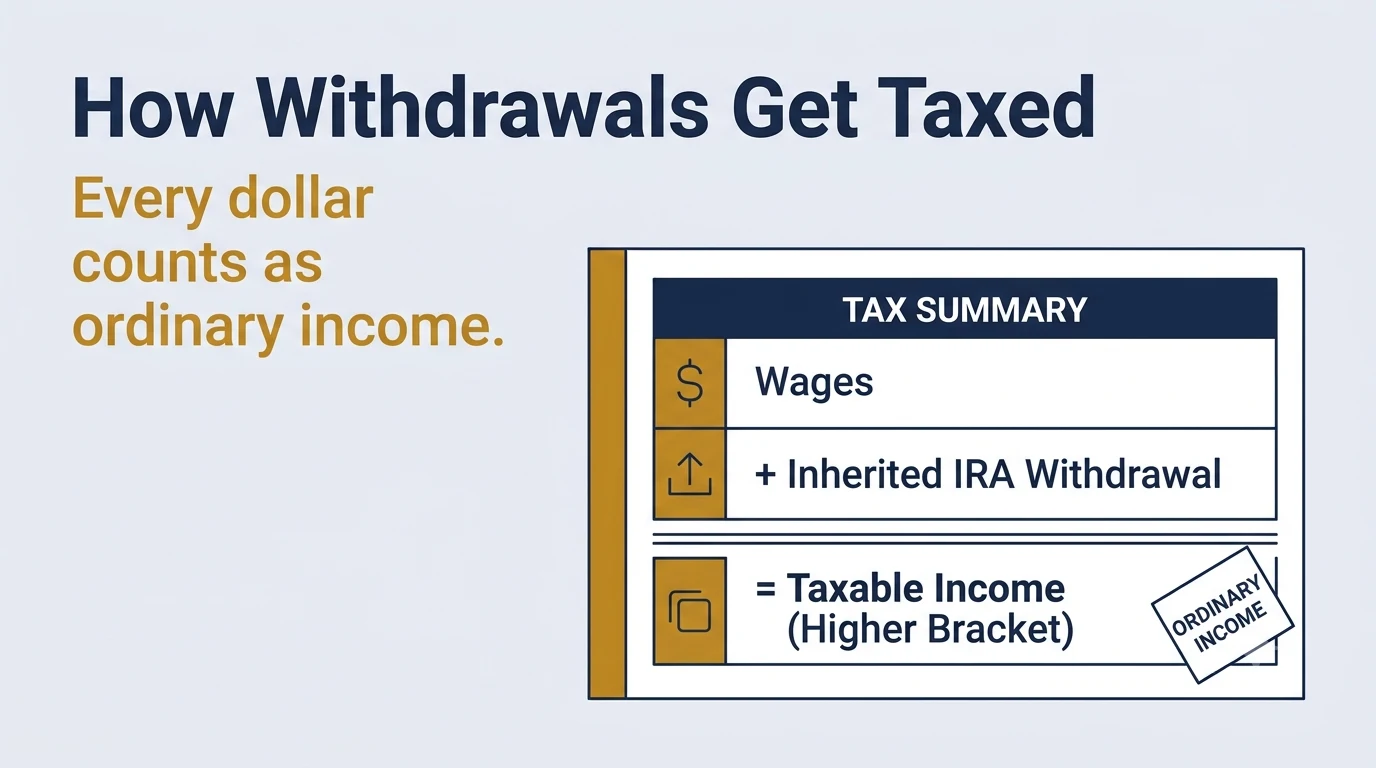
How Traditional Inherited IRA Withdrawals Are Taxed
How taxable income, inherited nondeductible basis, Form 8606, and separate decedent-by-decedent basis records work for a traditional inherited IRA.
↗Topic · 10 guides
How ordinary income, the net investment income tax, and bracket management interact with inherited IRA withdrawals.
How taxable income, inherited nondeductible basis, Form 8606, and separate decedent-by-decedent basis records work for a traditional inherited IRA.
↗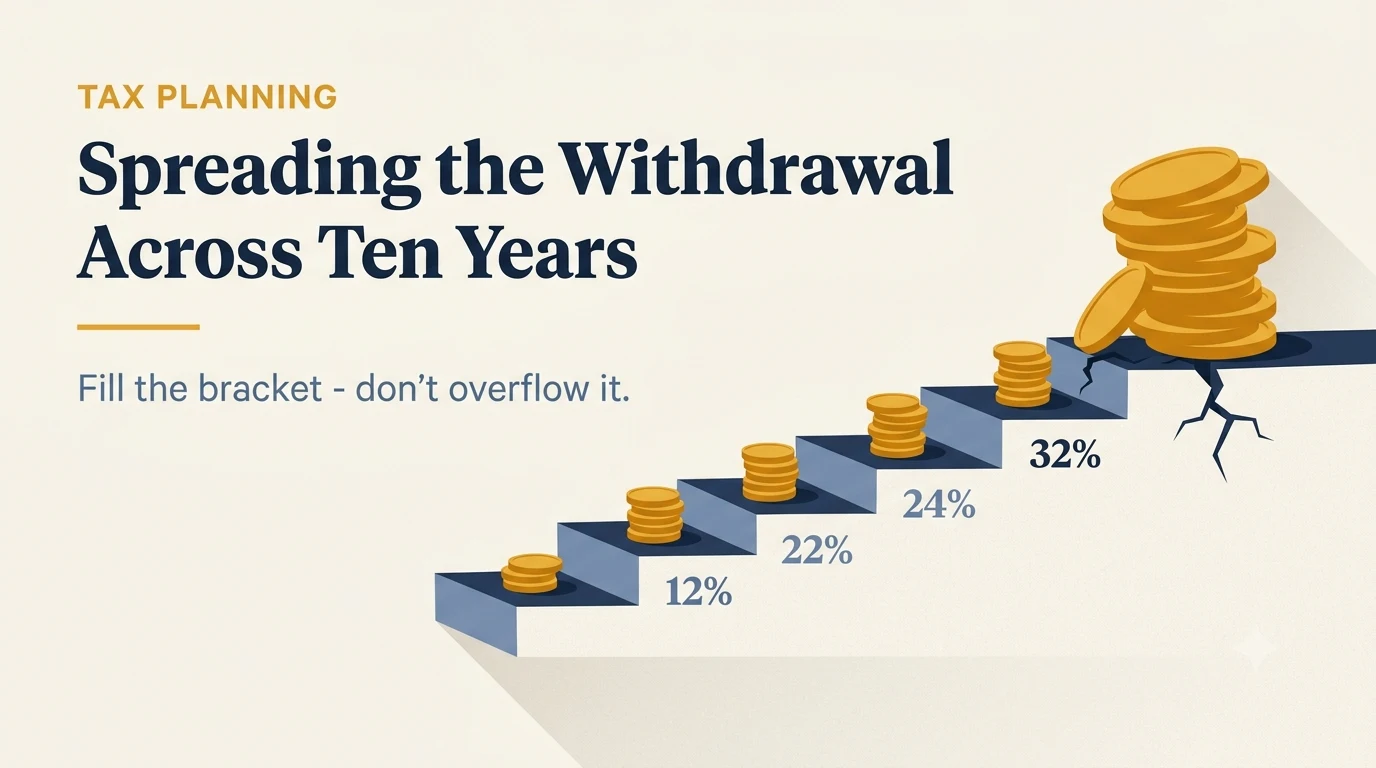
How ordinary-income brackets, Social Security taxation, capital gains, Medicare IRMAA, and state taxes can interact with optional inherited IRA withdrawals.
↗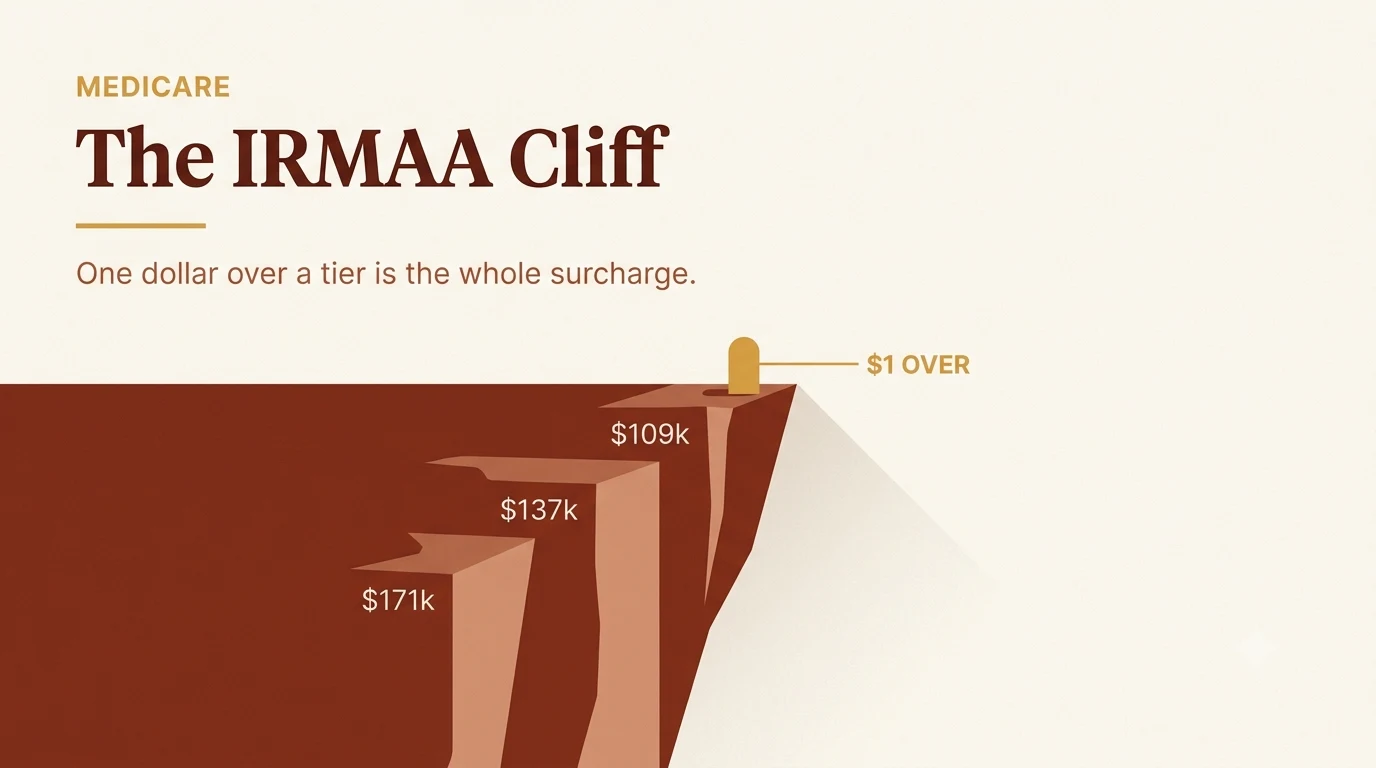
How taxable inherited IRA withdrawals feed into IRMAA MAGI, the typical two-year lookback, 2026 thresholds, SSA-44 life-changing events, and reassessment rules.
↗
Distributions to a beneficiary after the owner’s death are generally excepted from the additional 10% early-distribution tax, even when the beneficiary is under 59½.
↗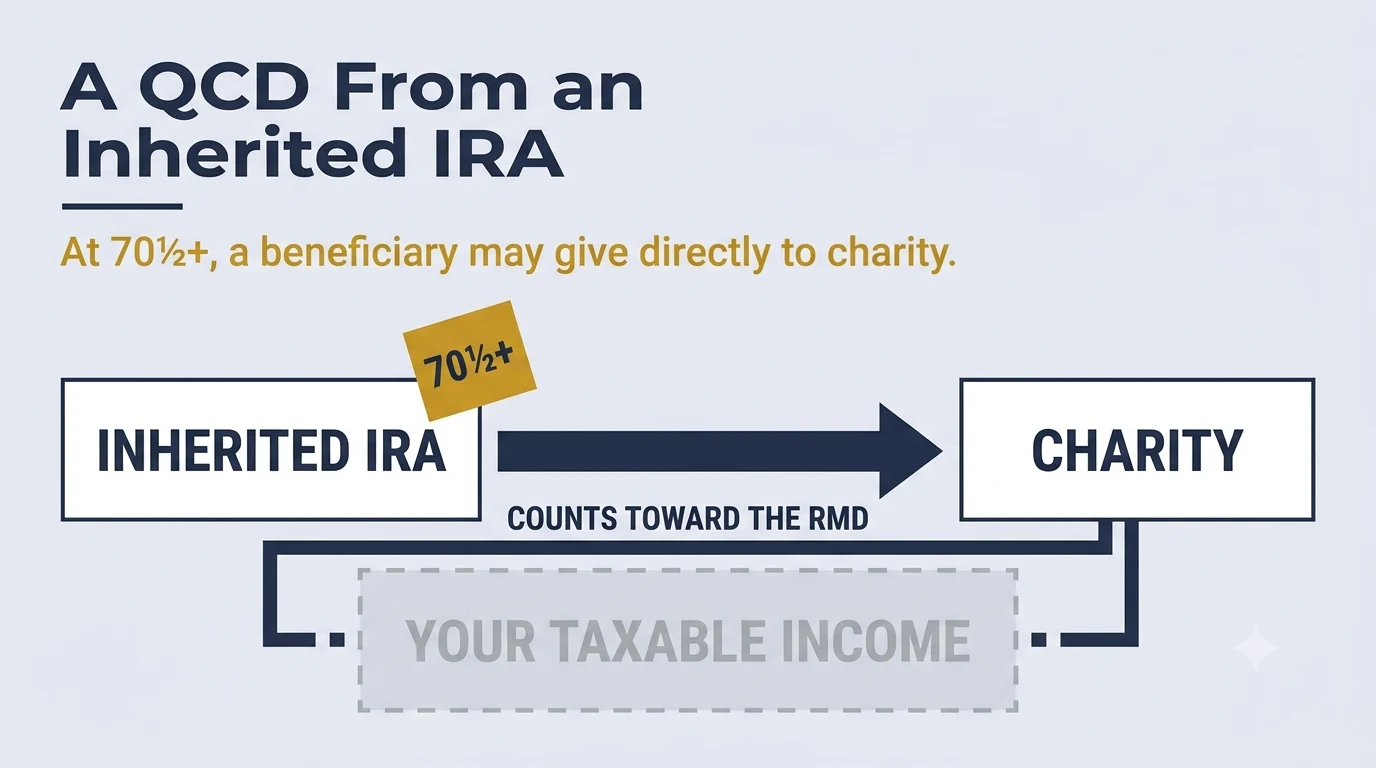
An inherited IRA beneficiary who has reached the QCD age can potentially direct an eligible IRA distribution to charity and have it count toward an RMD.
↗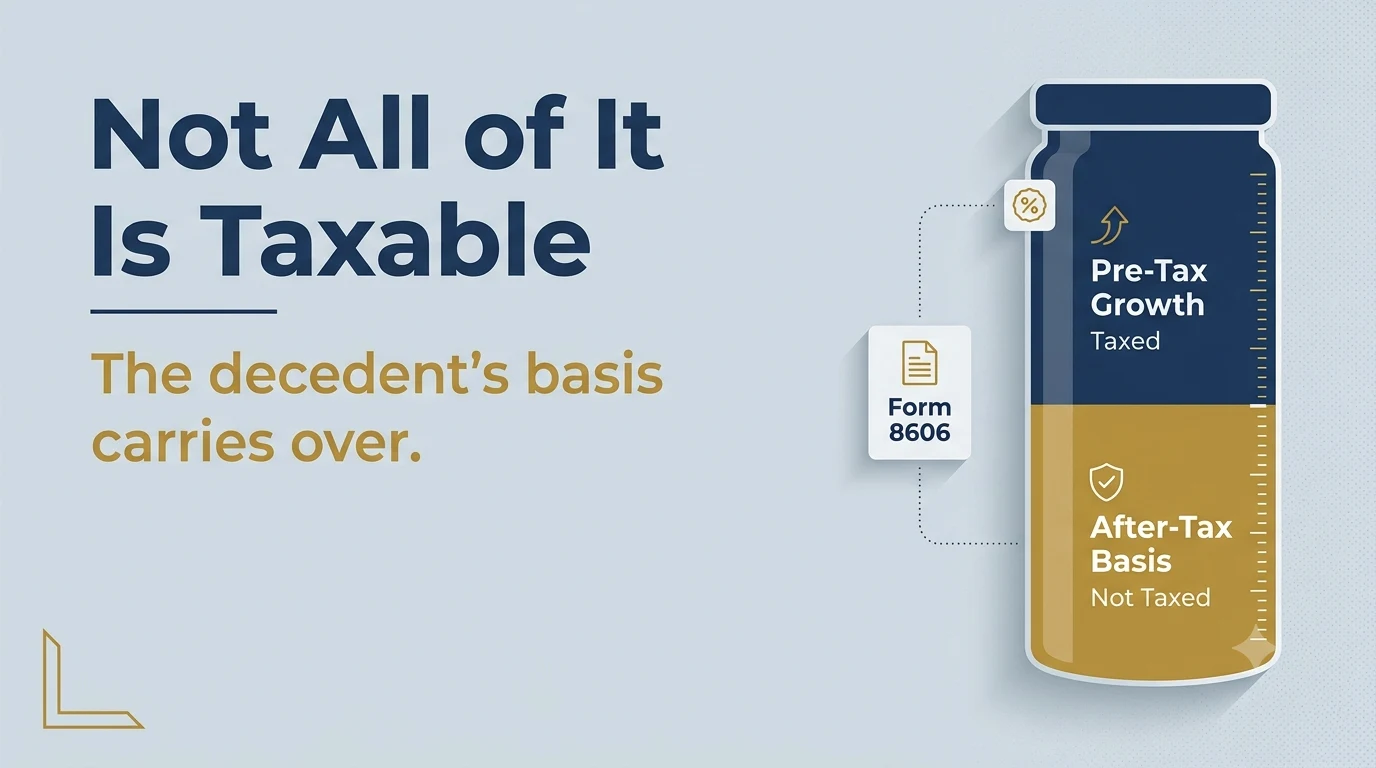
After-tax basis in a traditional IRA does not disappear at death; beneficiaries need the decedent’s basis records to avoid treating every dollar as taxable.
↗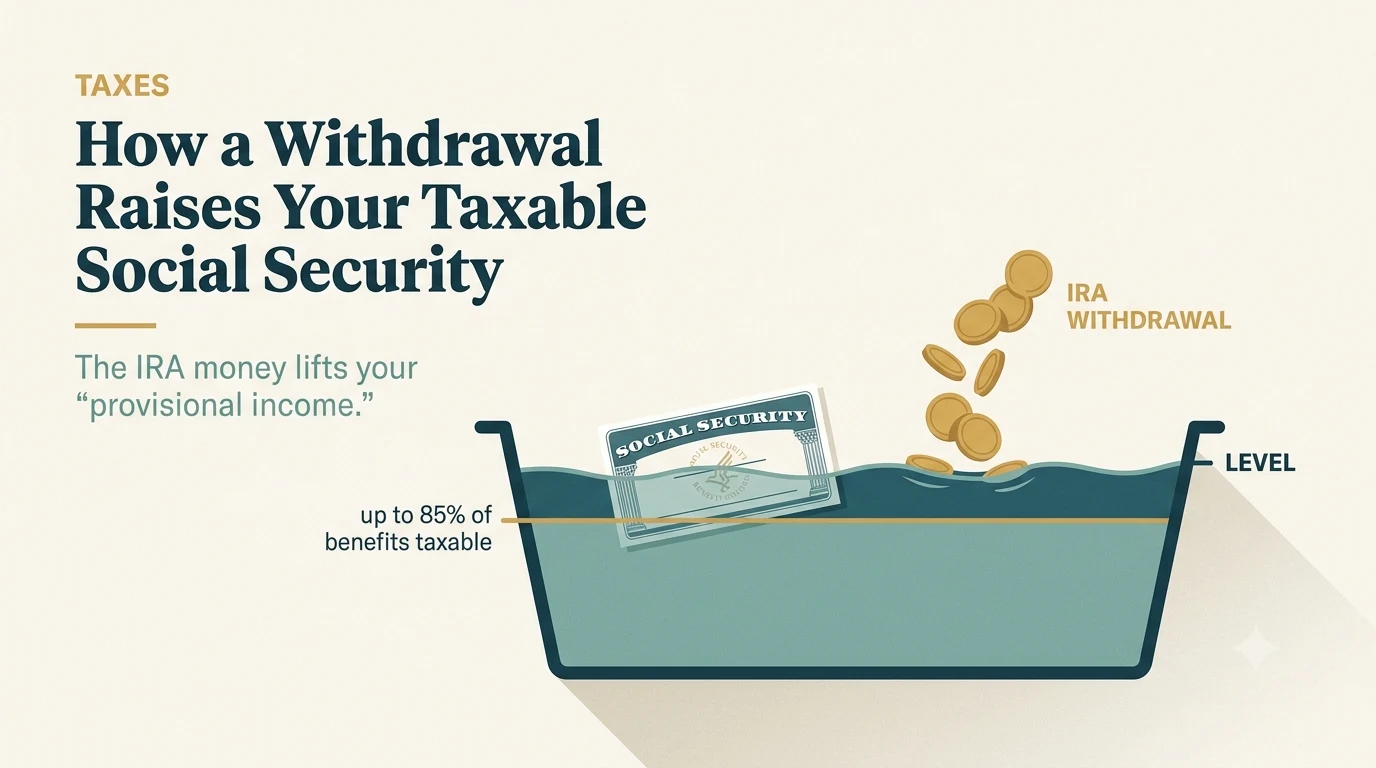
A taxable inherited traditional IRA withdrawal can increase provisional income and change how much Social Security is included in taxable income.
↗
Nonresident alien inherited IRA distributions can face U.S. withholding, treaty rules, Form W-8BEN documentation, and separate RMD deadlines.
↗
Inherited brokerage assets often receive a date-of-death basis adjustment; a traditional inherited IRA generally does not. Compare sale tax, withdrawals, and records.
↗
A 2026 example shows how a $300,000 inherited IRA can create very different federal tax when cashed out at once versus spread across ten years.
↗