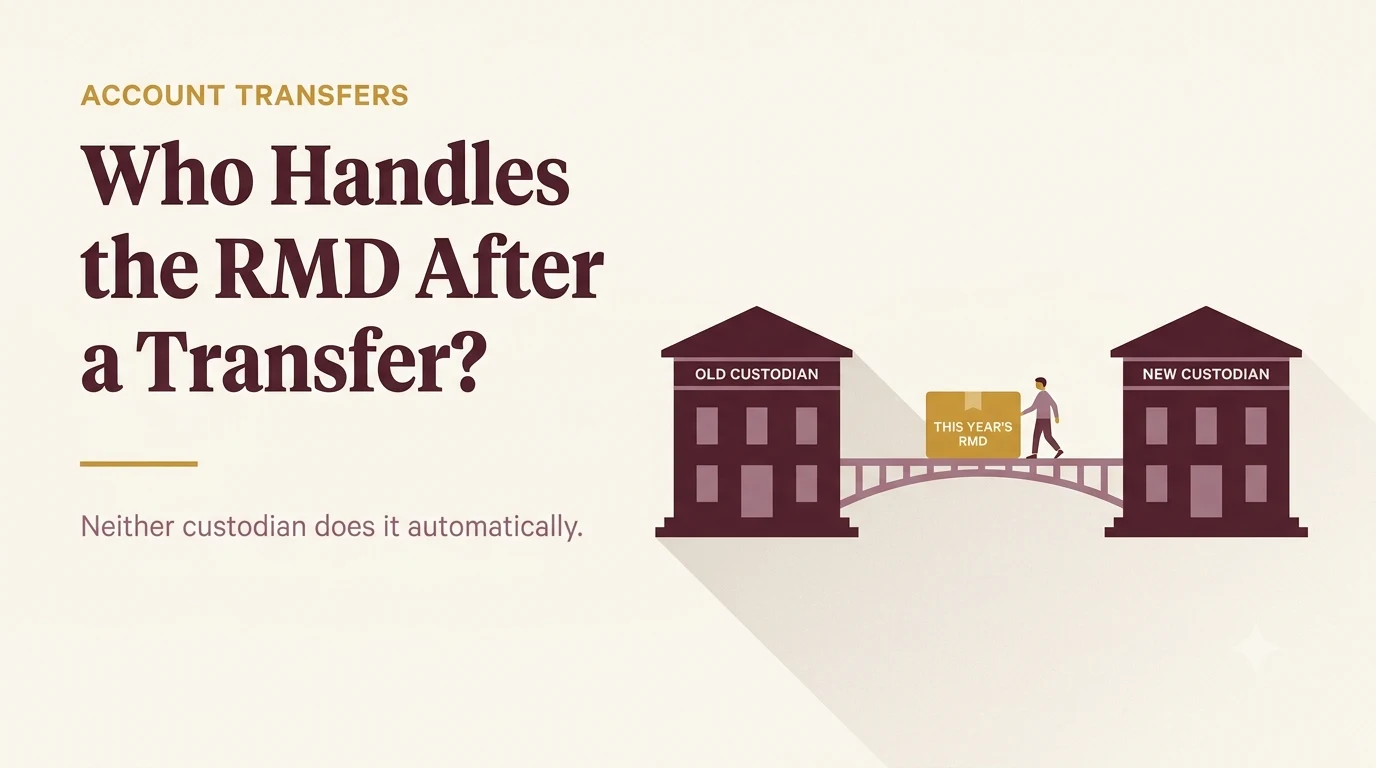
Inherited IRA Transfer Midyear: Who Is Responsible for the RMD?
Moving an inherited IRA between custodians does not erase the annual minimum; preserve the balance, denominator, and distributions across both institutions.
↗Topic · 9 guides
Moving an inherited IRA between custodians, trustee-to-trustee transfers, and the rollover mistakes that create taxable events.
Moving an inherited IRA between custodians does not erase the annual minimum; preserve the balance, denominator, and distributions across both institutions.
↗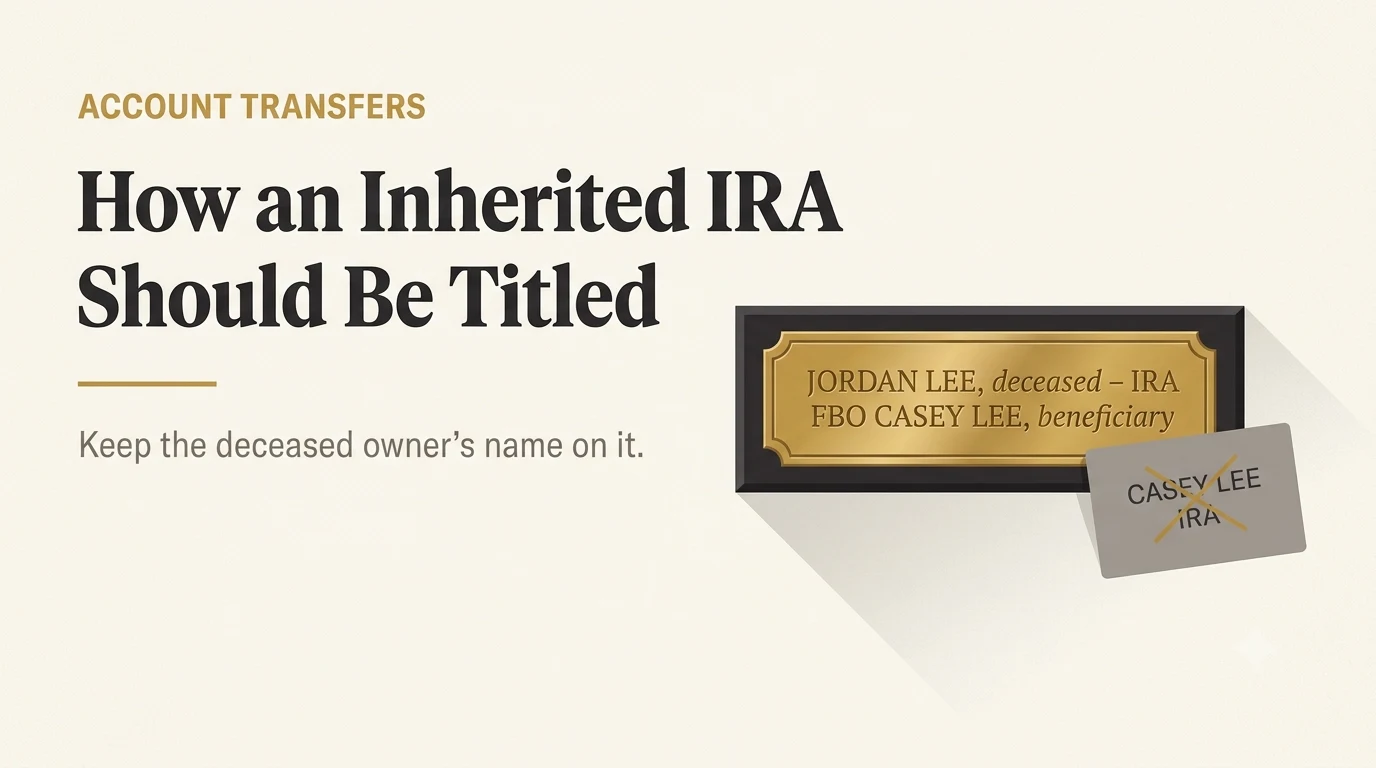
Inherited IRA registration should preserve the deceased owner and beneficiary relationship; a non-spouse beneficiary should not retitle it as a personal IRA.
↗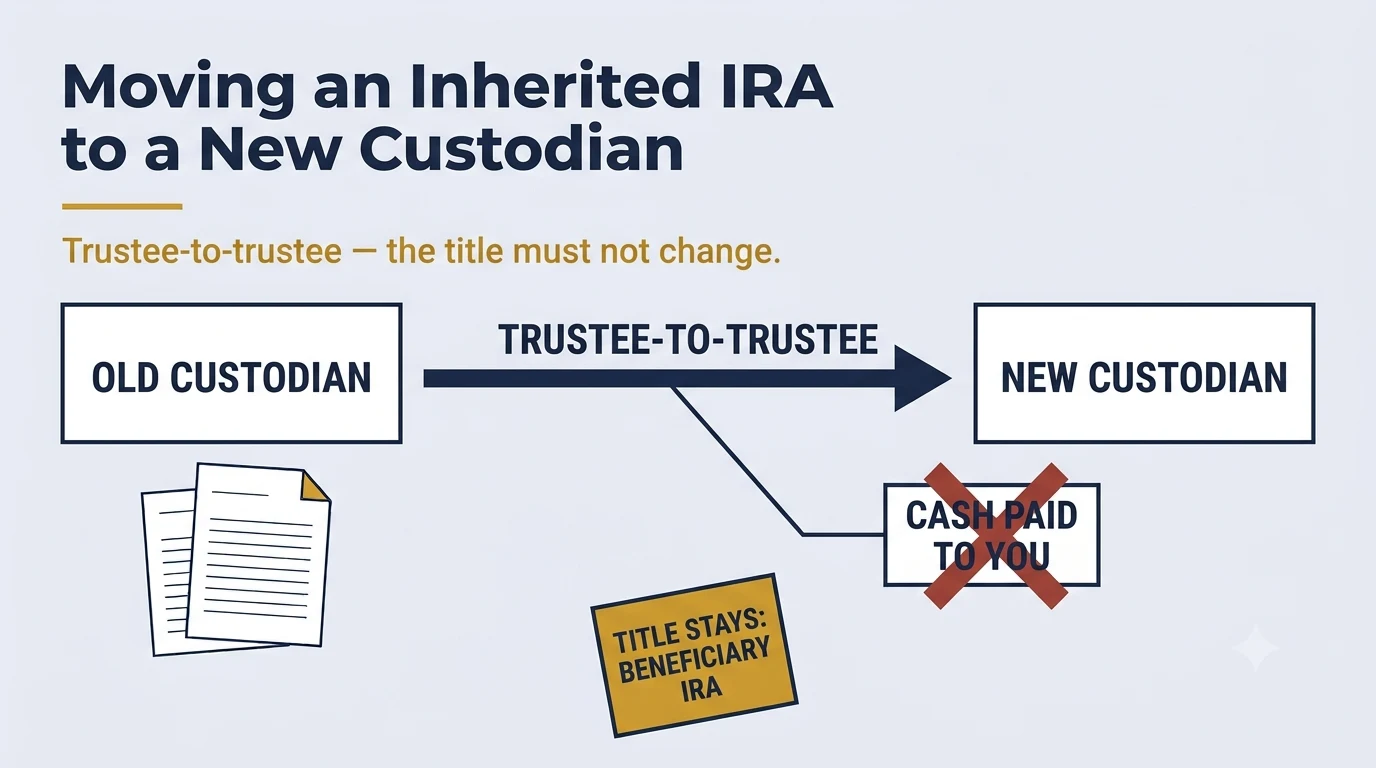
Non-spouse beneficiaries can change custodians without converting an inherited IRA into a personal IRA, but the transfer method and account title matter.
↗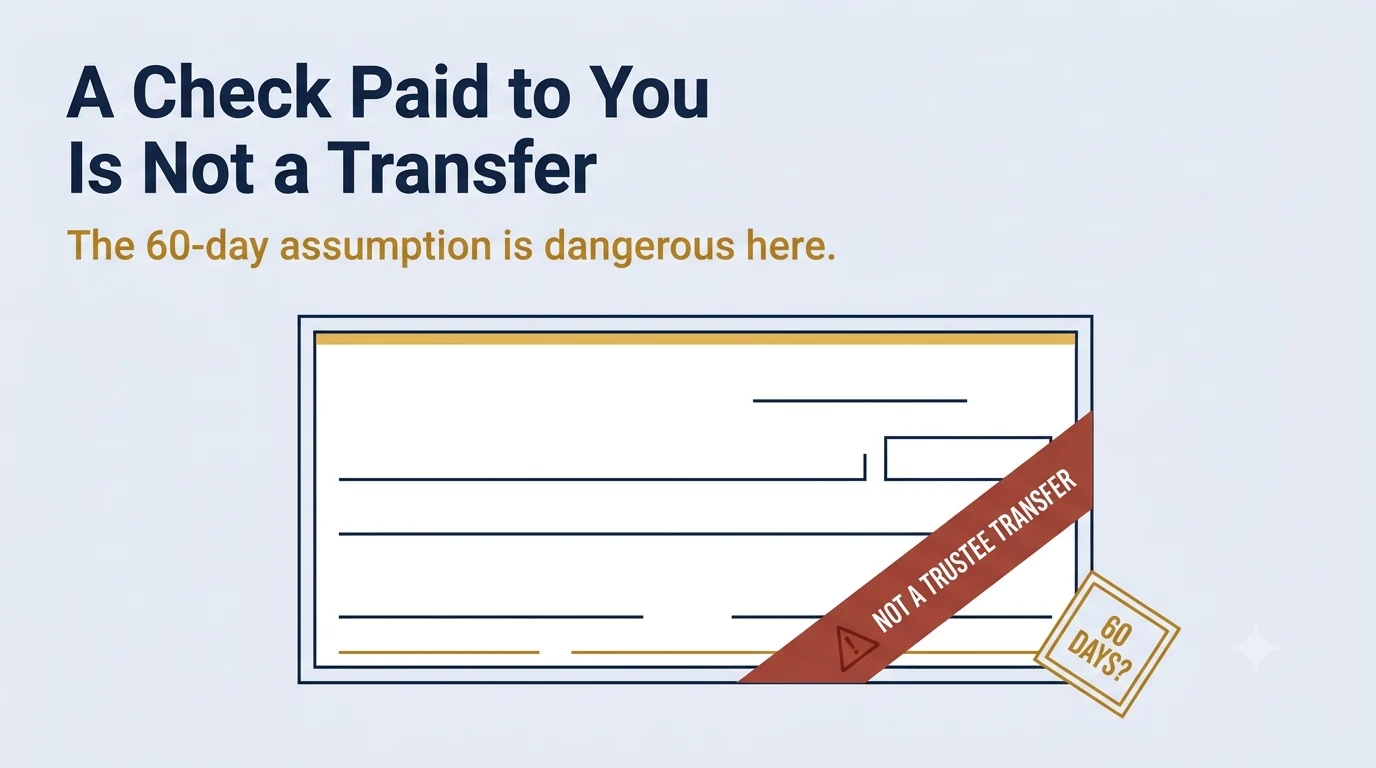
A check paid to a non-spouse beneficiary is not the same as a trustee-to-trustee inherited-IRA transfer; act before assuming the money can be redeposited.
↗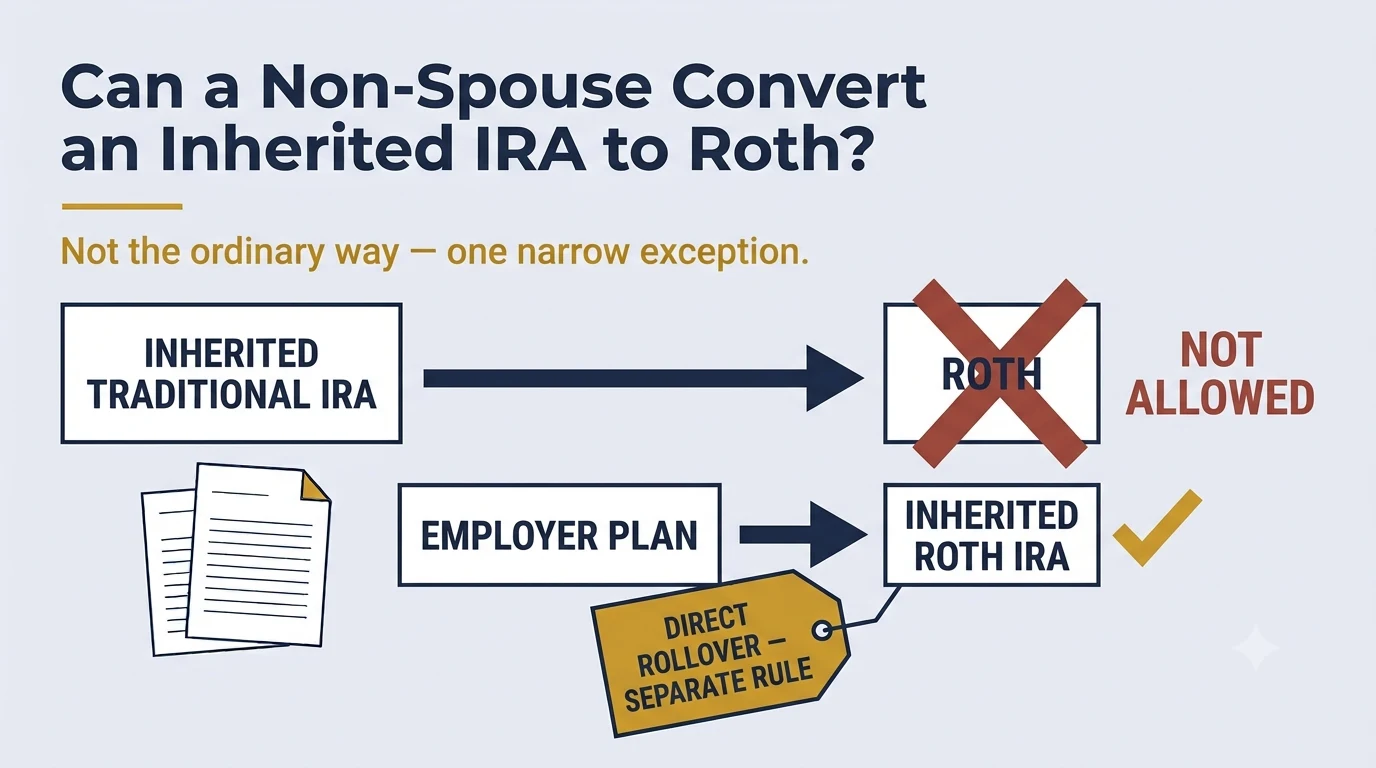
The ordinary IRA Roth-conversion route is generally unavailable to a non-spouse inherited IRA, but a direct rollover from an employer plan to an inherited Roth IRA is a distinct rule.
↗
The first month after inheriting an IRA is about preserving options: verify the beneficiary, account type, owner’s RMD status, title, and deadlines before acting.
↗
Multiple inherited IRAs from one decedent generally share the same death-based deadline, but RMD aggregation depends on account type and the same-decedent rule.
↗
An inherited precious-metals IRA follows the same federal beneficiary RMD rules, but valuation, custody, liquidation, and in-kind distributions add timing.
↗
Inherited IRA titles should preserve the decedent and beneficiary relationship. Learn which clerical errors are fixable and which payment mistakes can cause tax problems.
↗