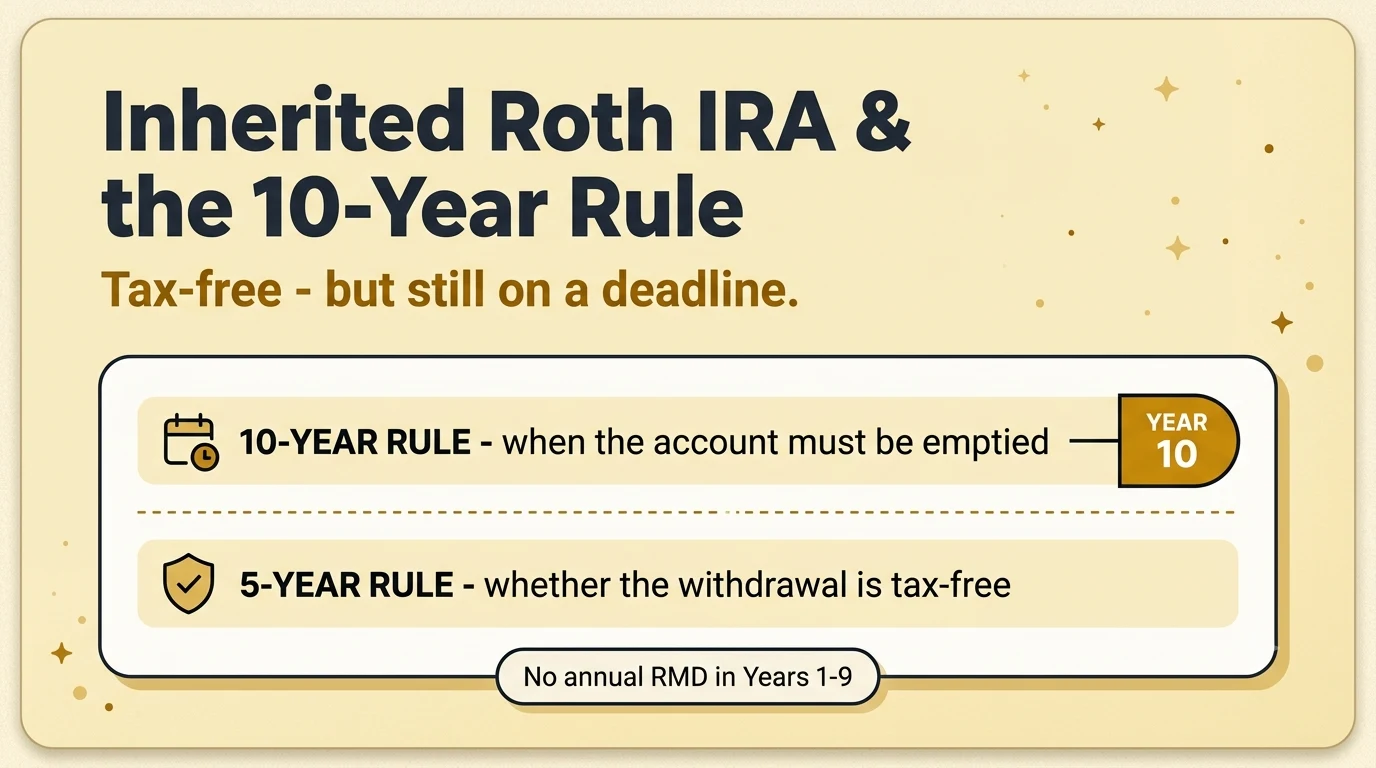
Inherited Roth IRA and the 10-Year Rule
How the Roth 10-year distribution deadline differs from the owner’s five-tax-year qualification period, including earnings, Form 8606, and death-related tax treatment.
↗Topic · 5 guides
How inherited Roth IRA rules differ from traditional inherited IRAs, including the 10-year rule and qualified-distribution treatment.
How the Roth 10-year distribution deadline differs from the owner’s five-tax-year qualification period, including earnings, Form 8606, and death-related tax treatment.
↗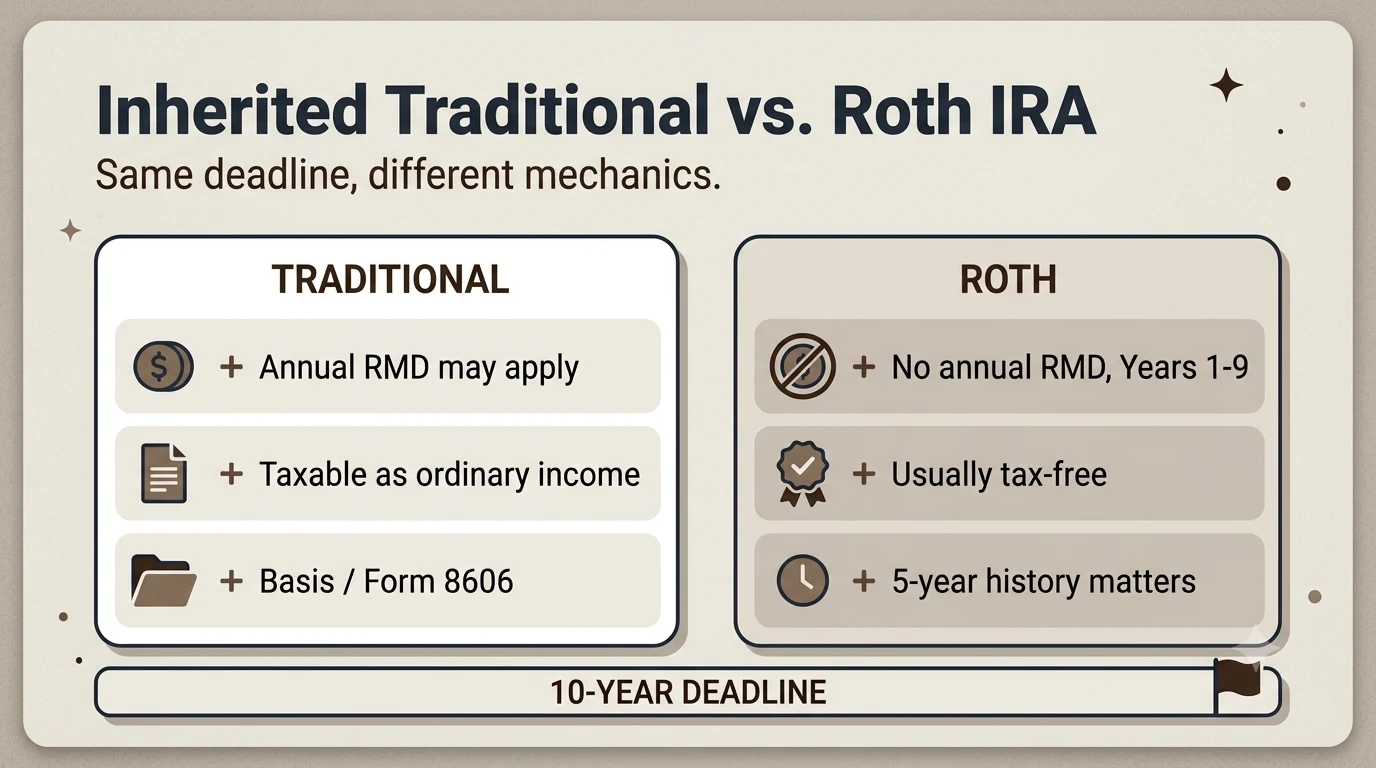
A direct comparison of annual RMDs, year-10 deadlines, taxable income, inherited basis, Roth five-year history, and account-registration rules.
↗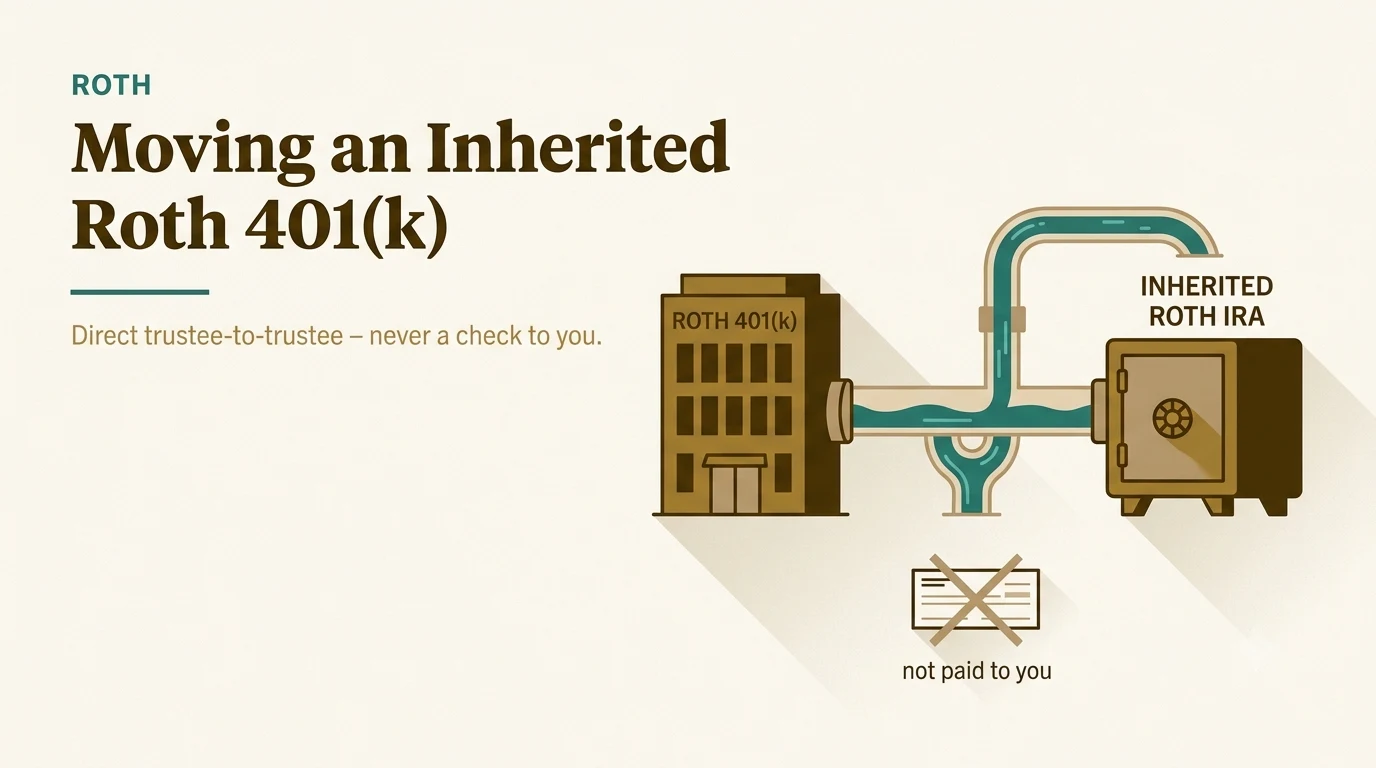
Designated Roth employer-plan accounts have post-death RMD rules, and a non-spouse beneficiary may have a direct-rollover route to a properly titled inherited Roth IRA.
↗
A non-spouse inherited traditional IRA is tracked separately from your own IRAs and generally is not included in the backdoor Roth pro-rata aggregation.
↗
An existing QLAC has special RMD and death-benefit rules after the IRA owner dies. A beneficiary cannot simply treat it as a blanket exception to the 10-year rule.
↗